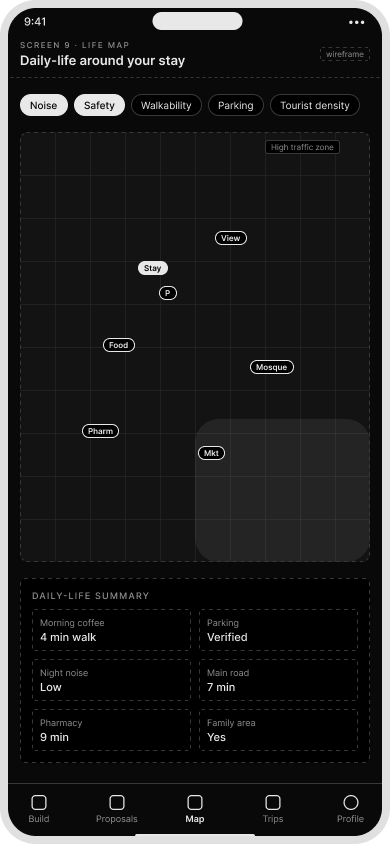
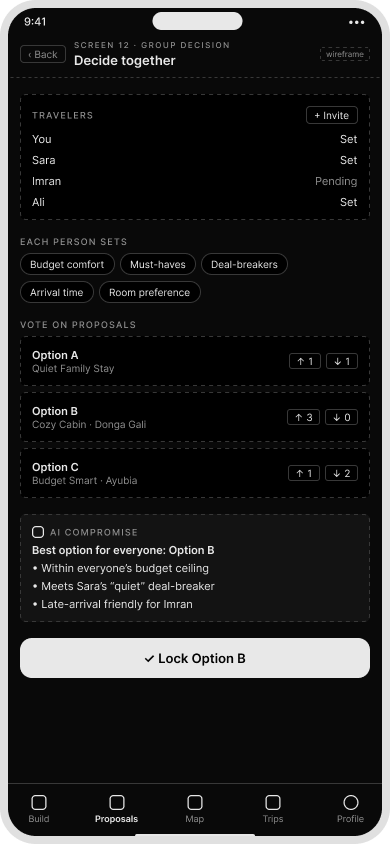
Category: AI-First Product Design / Travel & Hospitality / Concept R&D
Role: Product Strategy, UX Architecture, AI Interaction Design, Prototyping
Live Prototype: Figma
StayOS is a self-initiated R&D project asking a simple question: what would Airbnb look like if it were designed today, AI-first, from the ground up?
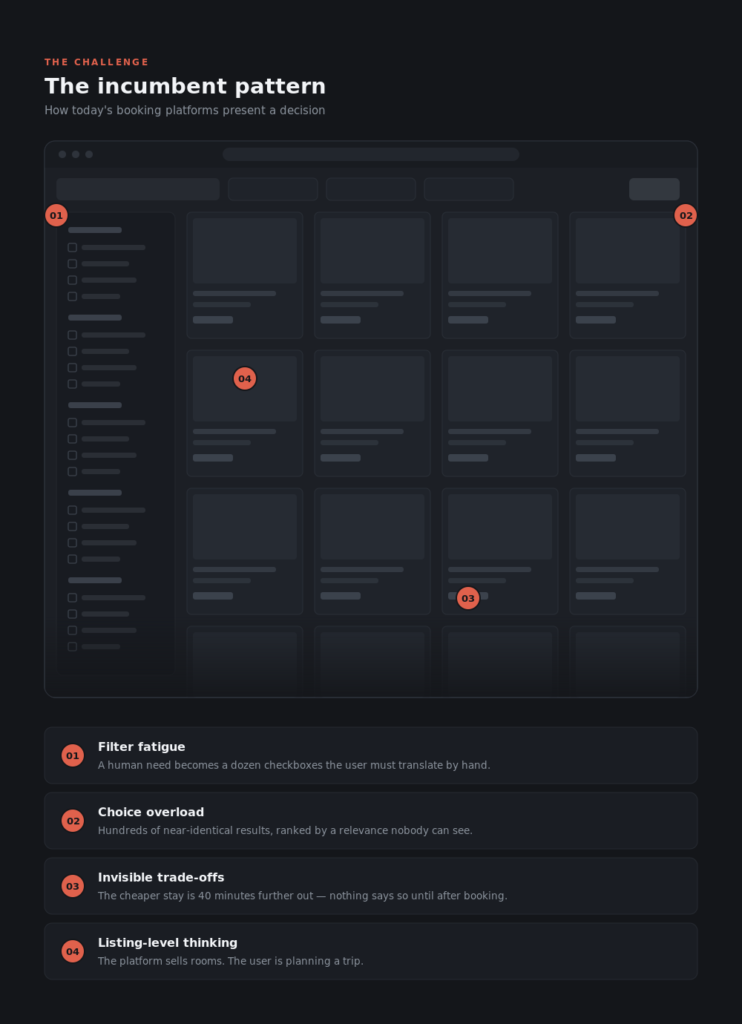
Airbnb’s interface is a product of the search era — filters, grids, and endless scrolling. It is very good at showing you rooms. It is not designed to help you decide. StayOS replaces that model with one that reads intent in plain language, weighs trade-offs on the traveller’s behalf, and returns a small set of well-reasoned trip proposals instead of hundreds of listings.
Every major booking platform pushes the cognitive load onto the traveller:
The decision itself is left entirely to the user, reverse-engineered from photos and an hour of review-scrolling.
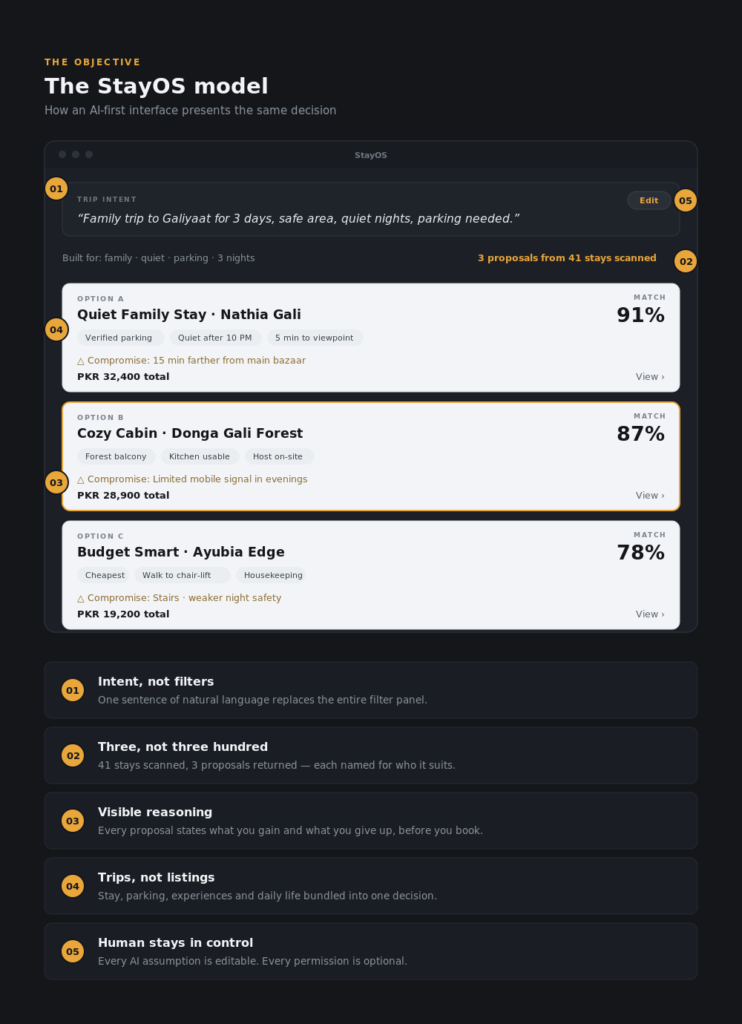
StayOS needed to:
This was not a visual refresh. It was an interaction-model change — the AI is the interface, not a chatbot bolted onto a search page.
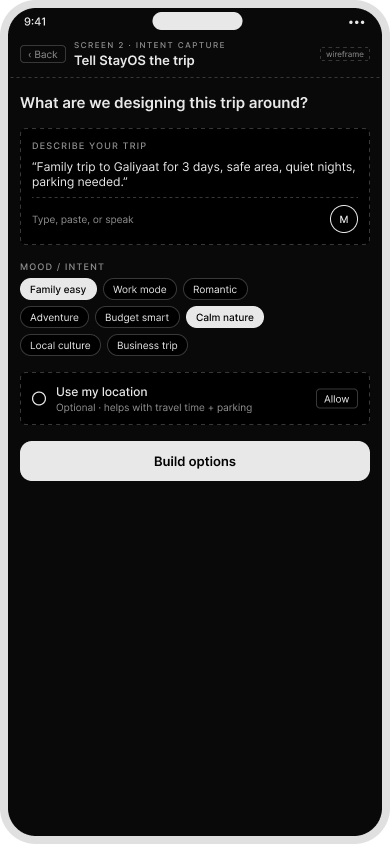
The journey begins with a sentence, not a search bar.
- Natural-language trip intent
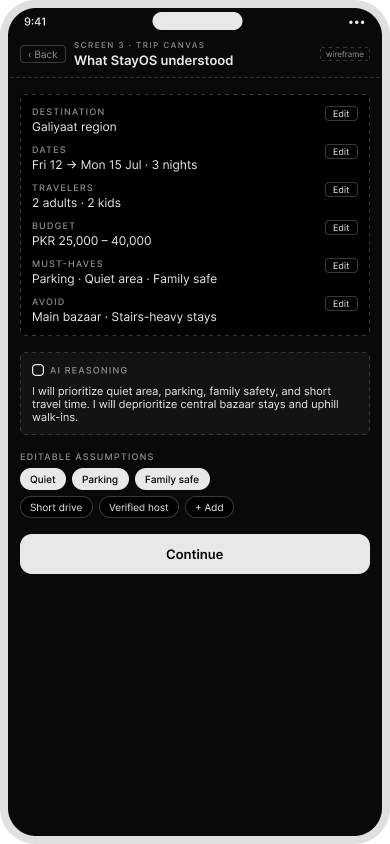
- Editable AI assumptions
- Trade-off dials instead of checkboxes
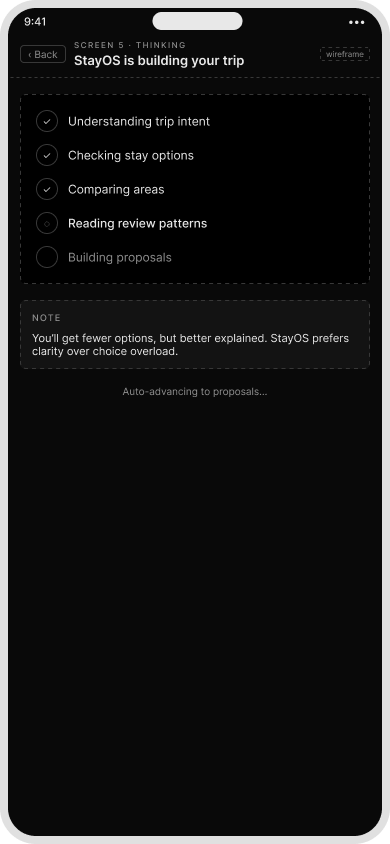
Forty-one stays scanned. Three proposals returned.
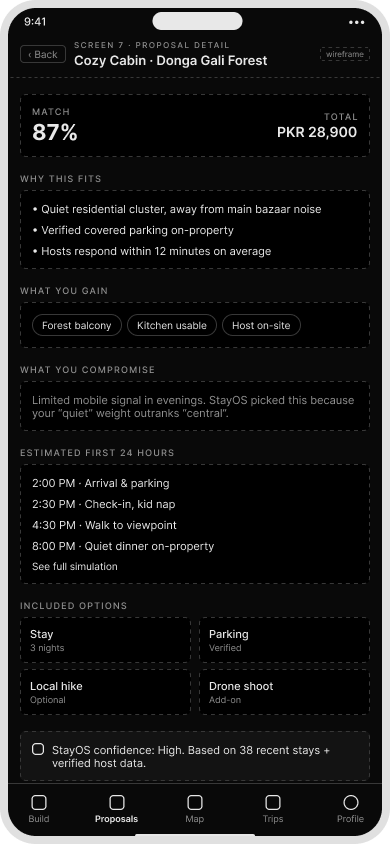
- Each one named for the traveller it actually suits
- not ranked by an algorithm the user can’t see.
What you gain. What you compromise.
- Confidence level on every proposal
- The first 24 hours simulated before you commit
StayOS demonstrates that an AI-first interface succeeds by removing decisions, not by adding features — the measure is how much the traveller no longer has to do.
What was built: 16 screens covering the full journey from intent to active trip · a functional deployed prototype · a clickable Figma prototype with 85 wired interactions · two phases of product and research documentation.
What changed for the traveller: a filter panel replaced by one sentence of intent · hundreds of results reduced to three explained proposals · eight decision criteria compared side by side that a user would otherwise assemble by hand across a dozen browser tabs · trade-offs and friction surfaced before booking rather than discovered on arrival.