Strategy, UX, design, frontend, automation. Same person. No handoff, no markup, no telephone game.
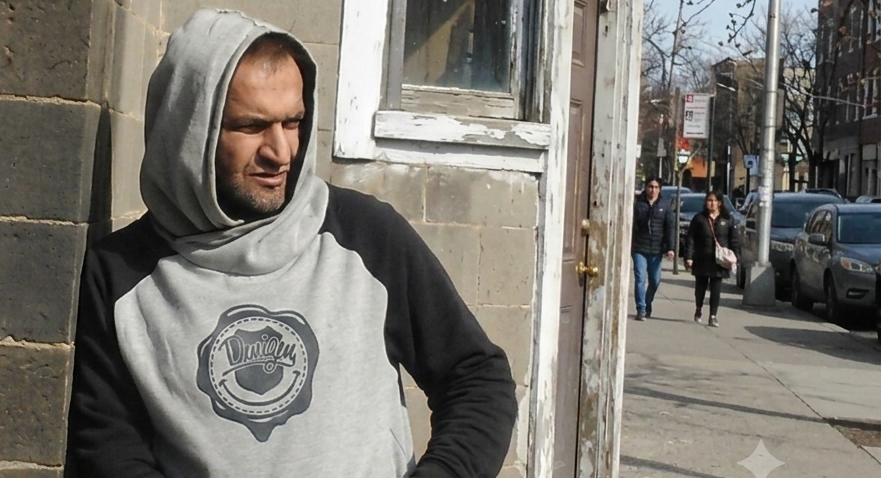
I’m Tauseef. I’m in Lahore, I’ve been building things for the web since the late 90s, and I’ve spent all the time working with American companies and agencies.
I specialize in building high-quality, stable, and user-friendly digital experiences. My approach ensures that every project not only looks polished but also functions seamlessly, reducing friction and delivering measurable results for your business.
Twenty years in this industry mostly means one of two things: you adapted, or you got very good at a thing that stopped existing. Here’s which one I did.
Late 90s — 2000s
Started where a lot of us started: timeline animation, ActionScript, motion for the web when the web could barely handle it. Then Flash died. Everything I’d built a career on became unemployable in about eighteen months.
Best thing that ever happened to me. I learned early that the tool is never the skill.
2010s
Rebuilt around WordPress and CMS architecture. Not page-building — systems: custom plugins, data models, the structural work that decides whether a site is still maintainable in year four. Somewhere in here I stopped being a designer who could code and started being both at once.
2012 – 2024
Twelve years leading frontend and UX across web and mobile, working with US teams. React, Vue, Angular, Node — enterprise interfaces, long-cycle product work, the same colleagues for over a decade.
Twelve years at one company is the part of my CV I’d point at if you only had time to look at one thing.
2015+
The shift from making it look right to making it work right — research, information architecture, journey mapping, usability testing. The thinking that happens before anything gets designed. It’s the part of the process most projects skip and most projects regret.
2020s
Identity work, design systems, component libraries. Not logos as decoration — marks and systems built to survive a decade and six people touching them.
Now
Getting into AI feels exactly like finding Flash in the late nineties. Same “oh, this changes everything” jolt. So I ran at it: AI intake agents, automated QA pipelines, lead-qualification systems. I built Aaira, the assistant on this site, and CIA, a client-interaction agent that runs a whole funnel.
2025 – present · Lead Developer, SEO.LA (USA, remote). High-traffic client platforms, custom WordPress systems, API integrations, performance work.
B.C.S., Hajvery University · UX Design Fundamentals, Coursera · currently working through accessibility and AI-systems certification.
Every portfolio site claims everything. Here’s the honest version.
I’d rather tell you this now than three weeks into an invoice.
Jobs delivered. Every single one rated by the client who paid for it. Average: five stars.
Most designers have never had one project formally scored. I’ve had five hundred — a decade-long feedback loop where every misread brief and every unclear handoff came back to me with a number attached. It made me much better at this, and considerably faster at spotting a project that’s about to go sideways.
The longer version: 1,000+ projects across twenty years. Twelve years at EWS Systems. Clients who’ve come back for the fourth and fifth time. Work for Stray Cat Alliance in Los Angeles, for artists including Monica, American Nightmare and Cold Cave, and for agencies who bring me in when something’s broken and the deadline already passed.
You’re considering hiring someone eight thousand miles away. Here’s what you actually want to know.
I hold a 9am–2pm US Eastern overlap every working day, and I shift earlier for West Coast clients when a project needs it. Not "I'll get back to you within 24 hours" — actual hours where we are both at a desk.
Same working day, always. If something is genuinely on fire, faster than that.
Every phase ships a document. Not a status update — an artifact. Research findings, IA maps, flows, prototypes, component specs, handoff docs. You always know what was decided and why, and you keep all of it.
You do. Code, designs, files, assets, source. On final payment it is yours — no license, no lock-in, nothing hosted on my account. Take it to another developer next year and everything is documented well enough that they will manage.
Thirty days of fixes after launch, free. After that we agree an hourly or a small retainer, whichever suits. I have had clients for a decade — that does not happen if you disappear once the invoice clears.
Usually a diagnostic before anything else. I look at what you have, tell you what is actually wrong, and give you a real estimate with real numbers. You will know the scope and the cost before you commit to the build.
Tell me what you’re trying to build, or what’s already built and misbehaving. I’ll tell you what I think it actually needs, whether that’s me or not.
I write occasionally about the stuff I keep running into. Read those →


