

A two-sided parking marketplace connecting drivers with property owners offering spaces — built around real-time, map-based discovery, reservation workflows, and host management tools.”
Prototype: HTML
ParkSwift — UX/UI Case Study
ParkSwift is a two-sided marketplace platform that connects drivers searching for parking with property owners offering available parking spaces.
The system is designed around real-time discovery, reservation workflows, and host management tools, with a strong focus on map-based interaction and availability clarity.

The Challenge
Urban parking systems are typically fragmented and inefficient
- Lack of real-time visibility into available parking spaces
- Difficulty in discovering nearby options quickly
- Manual and unstructured booking processes
- No unified system for hosts to manage listings and availability
- High friction between search, reservation, and confirmation

My Role
Led the UX/UI design and system structuring:
- Conducted UX research & workflow analysis
- Restructured the information architecture
- Designed UI/UX in Figma
- Developed a component system for consistency and scalability
My Approach
Map-First Discovery System
Prioritized spatial interaction over traditional listing views
- Integrated map + search hybrid interface
- Real-time visual representation of parking availability
- Quick access to nearby parking spots
Structured Search & Filtering
Designed for fast decision-making
- Filters for price, duration, rating, and features
- Grid + map synchronized results
- Compare and shortlist functionality
Guided Booking Workflow
Reduced friction in high-intent actions
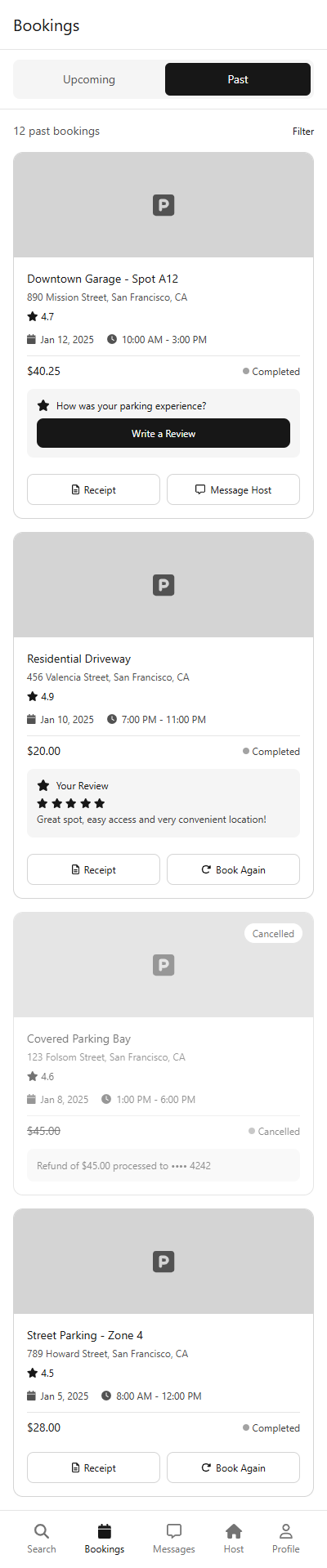
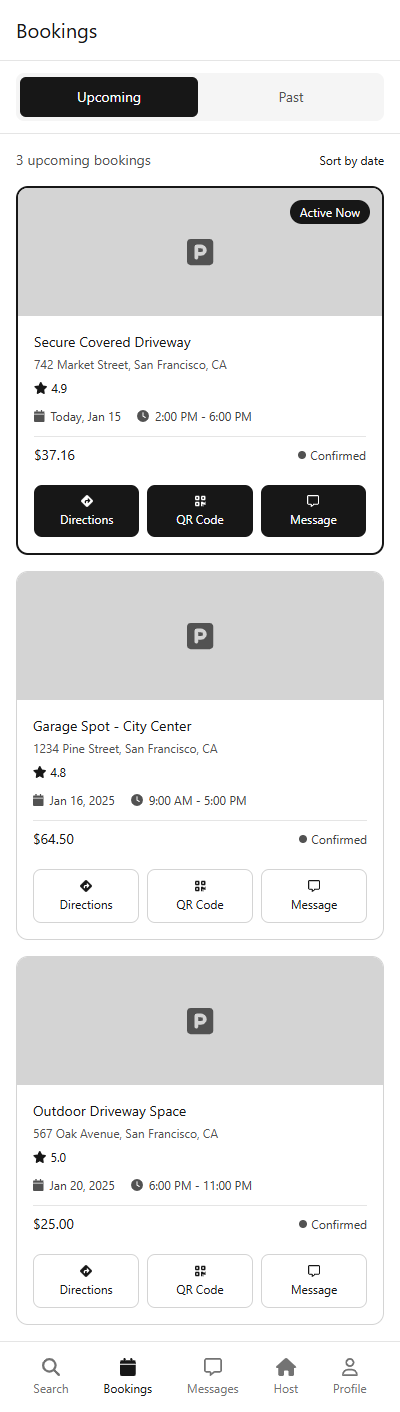
- Multi-step reservation flow (dates → details → confirmation → payment)
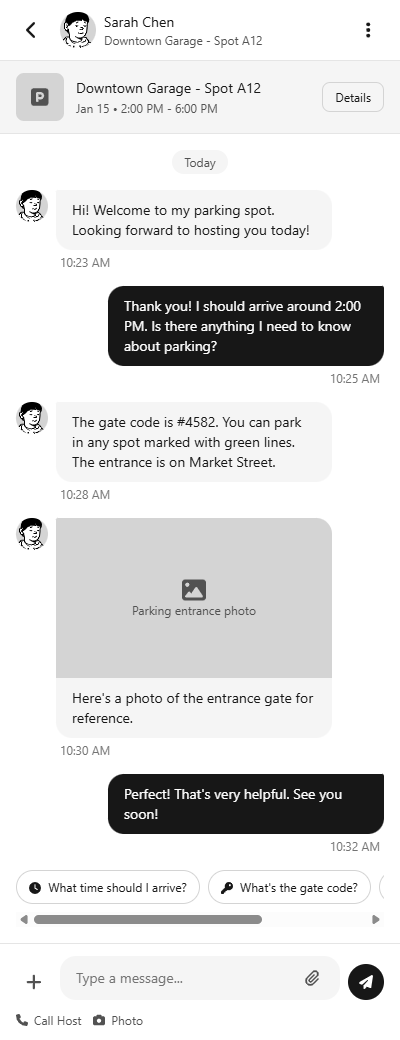
- Context-aware prompts for user intent
- Clear availability validation before booking
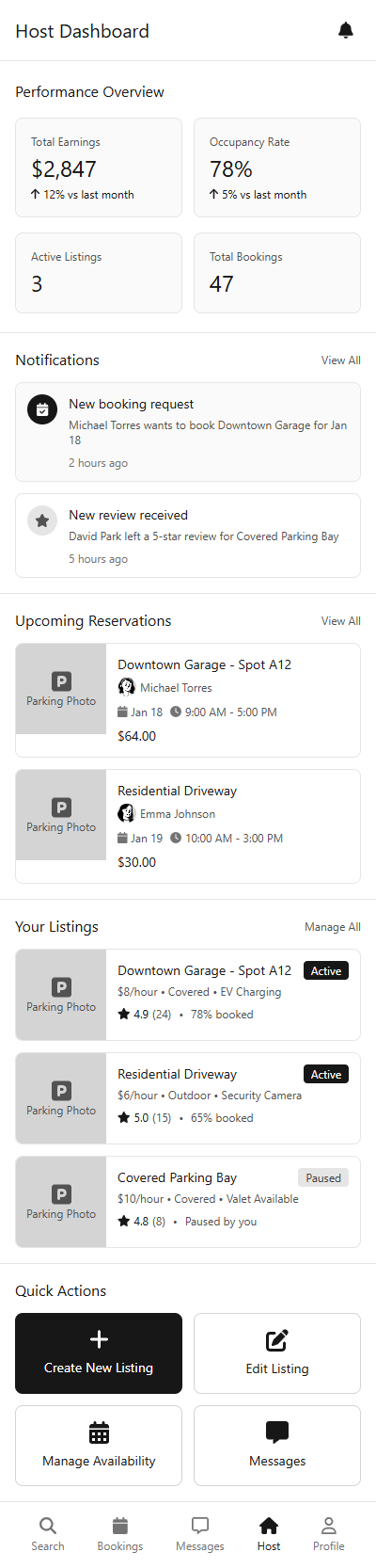
Host-Centric Management
Built operational control for parking owners
- Create/Edit parking listings / Manage availability and pricing
- Track bookings (upcoming, active, completed)
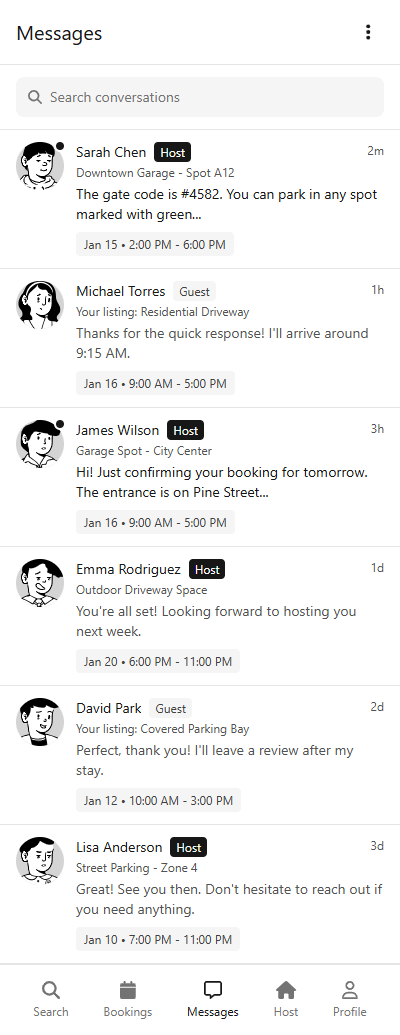
- Dedicated host dashboard with notifications and messaging
The Outcome
The platform transforms fragmented parking discovery into a structured digital marketplace, enabling:







- Faster discovery of available parking spaces
- Reduced booking friction through guided flows
- Clear separation of renter and host responsibilities
- Efficient listing and availability management for owners
- Scalable marketplace structure for urban environments